
of patients admitted to hospital after a stroke are affected by urinary incontinence6

With a growing ageing population, a greater prevalence of chronic or complex urological conditions, and the ongoing pressure on the healthcare systems, the demand for home care is on the rise.
At BD, our goal is to reduce the burden of urological conditions in the community on the healthcare systems and meet the growing demand for high-quality continence care that is convenient and comfortable for the patient. We believe every individual deserves to live their life to the fullest.

Effective homecare with the right product can help healthcare systems whilst restoring dignity to people and improving their quality of life. We pride ourselves on getting to the heart of healthcare challenges so we can optimise our support for you… and that’s why we’ve got the solution.

In Europe, a systematic review of published prevalence, incidence and risk factor data for female urinary incontinence (UI) from 2000–2010, revealed that UI prevalence ranged from 14–69%.1Lower urinary tract symptoms are common in elderly people, having significant effects on individuals, caregivers and the wider healthcare system.2In primary care, urological issues are the third most common type of complaint in patients 65 and over: accounting for at least a part of 47% of office visits.3The prevalence of long-term catheter use also increases with age, particularly amongst men.4

Urological conditions such as urinary incontinence can restrict the enjoyment someone feels in life.5
People may feel embarrassed, with low of self-esteem and physical attractiveness, which can lead to a deterioration in sexual and physical activity, loneliness and depression.5
At BD HomeCare, we’re committed to helping you to inspire your patients to take control of their urological condition and live their lives fearlessly
Such as spinal cord injury, multiple sclerosis, stroke, and Parkinson’s disease can lead to lower urinary tract dysfunction.6
of patients admitted to hospital after a stroke are affected by urinary incontinence6

of patients with Parkinson’s disease develop neurogenic detrusor overactivity of the bladder6

of patients with multiple sclerosis suffer from lower urinary tract symptoms 10 years after disease onset7
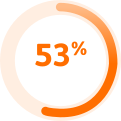
of patients with dementia are affected by urinary incontinence8

of spinal cord injury patients experience some degree of bladder dysfunction9*
9*. Based on data from the US.
Our BD HomeCare solution is designed to equip you with the tools you need to deliver safe and efficient urological care that minimally impacts your patient’s lifestyle and empowers them to achieve their best possible quality of life
Find out more and book a demo today