

Nothing
is everything
Protection without compromise

Protection without compromise
Sterile, efficient, and sustainable by design, ChloraPrep™ offers confidence in surgical outcomes, keeping patient safety at the heart of every decision.
Over 50 clinical studies have demonstrated the safety and efficacy of the BD ChloraPrep™ skin antiseptic portfolio of products. BD ChloraPrep™ skin antiseptic has been featured or published in a number of leading peer-reviewed medical journals.11
BD ChloraPrep™ has been proven to achieve greater outcomes by minimising surgery-related adverse events. It is crucial to use a modern, evidence-based skin antisepsis method that reduces that risk and helps you stay in control.11
Giving you nothing but evidence-based strategies
Ideal formulation
Proven efficacy to prevent surgical site infections (SSIs)
Sterile solution
Minimises the risk of extrinsic contamination
Sterile applicator
Promotes standardisation, minimising the risk of manipulation errors
Minimises the risk of surgical fire and chemical burns
Minimises the risk of extrinsic contamination
Pharmaceutically licensed
Provides quality assurance of product safety
All-in-one
No ancillary products and equipment needed
Promotes standardisation, reducing inefficiencies
Reduced patient prep time
No material prep time
Faster application time
Right dose of solution: faster drying time
Reduced operating room waste and carbon footprint
No ancillary products and equipment needed
Application of the right dose
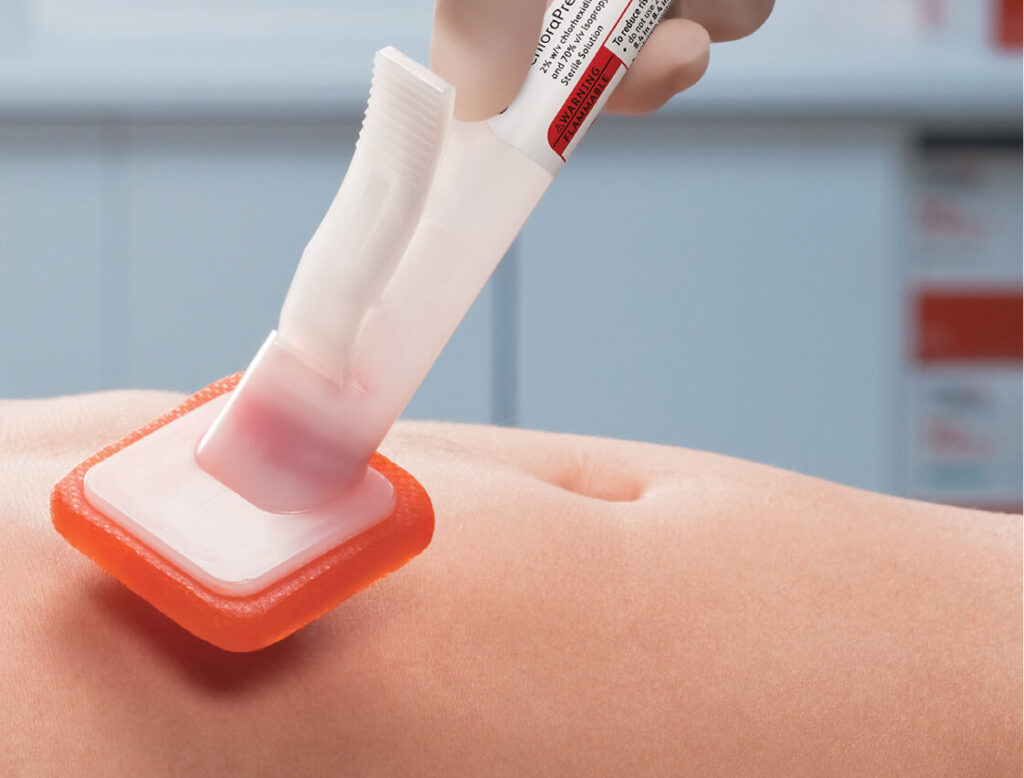
Skin preparation you can trust
BD ChloraPrep™
- Complete sterility both inside and out, for the entire 3-year shelf life 28
- BD ChloraPrep™ provides up to 48 hours of protection once applied 29
- Back and forth motion to reach microorganisms in the deeper cell layers of the epidermis 25,30
- Sterile sponge designed for controlled flow of the antiseptic 28

Get in touch and get started with BD
 Patient safety
 Efficiency
 Sustainability
 BD ChloraPrep™
Let’s connect!
References
- Health First Europe. 2020. Insight report: Identifying the gaps between evidence and practice in the prevention of SSIs. Available at: https://healthfirsteurope.eu/publication/insight-report-identifying-the-gaps-between-evidence-and-practice-in-the-prevention-of-ssis/#. Last accessed December 2025.
- ECDC. 2013. Point prevalence survey of healthcare-associated infections and antimicrobial use in European acute care hospitals 2011-2012. Available at: https://www.ecdc.europa.eu/en/publications-data/point-prevalence-survey-healthcare-associated-infections-and-antimicrobial-use-0. Last accessed December 2025.
- Centers for Disease Control and Prevention (CDC). 2025. Surgical Site Infection Event (SSI). Available at: https://www.cdc.gov/nhsn/pdfs/pscmanual/9pscssicurrent.pdf. Last accessed November 2025.
- National Institute for Health and Care Excellence (NICE). 2020. Surgical site infections: prevention and treatment. Available at: https://www.nice.org.uk/guidance/ng125/resources/surgical-site-infectionsprevention-and-treatment-pdf-66141660564421. Last accessed November 2025.
- Anderson DJ, Podgorny K, Berríos-Torres SI, et al. Strategies to prevent surgical site infections in acute care hospitals: 2014 update. Infection Control & Hospital Epidemiology. 2014;35(S2):S66–88.
- McFarland AM, Manoukian S, Mason H, Reilly JS. Impact of surgical-site infection on health utility values: a meta-analysis. British Journal of Surgery. 2023;110(8):942–949.
- The Society of Healthcare Epidemiology of America (SHEA), The Infectious Disease Society of America (IDSA), The Association for Professionals in Infection Control and Epidemiology (APIC) and The American Hospital Association (AHA). 2014. Healthcare-Associated Infections. A Compendium of Prevention Recommendations. Available at: https://eguideline.guidelinecentral.com/i/1059134-prevention-of-hais/0?. Accessed January 2026.
- Keenan JE, Speicher PJ, Thacker JK, et al. The preventive surgical site infection bundle in colorectal surgery: an effective approach to surgical site infection reduction and health care cost savings. JAMA surgery. 2014;149(10):1045–1052.
- Arnal-Velasco D, Martinez-Nicolas I, Fabregas N, et al. Multidisciplinary, evidence-based, patient-centred perioperative patient safety recommendations: a European consensus study. Br J Anaesth. 2025;135(3):723–36.
- Morikane K, Russo PL, Lee KY, et al. Expert commentary on the challenges and opportunities for surgical site infection prevention through implementation of evidence-based guidelines in the Asia-Pacific Region. Antimicrob Resist Infect Control. 2021;10(1):65
- BD Data on file. BD ChloraPrep Clinical Compendium. 2020.
- BD Data on file. UKI-112815 Signature Programmes EMEA. 2023.
- Reichman DE, Greenberg JA. Reducing surgical site infections: a review. Rev Obstet Gynecol. 2009;2(4):212–221.
- Association of perioperative Registered Nurses (AORN). 2024. Infection Prevention: A Perioperative Nurse’s Guide to preventing surgical site infections. Available at: https://www.aorn.org/article/infectionprevention-a-perioperative-nurses-guide-to-preventing-surgical-site-infections. Last accessed December 2025.
- Groenen H, Bontekoning N, Jalalzadeh H, et al. Incisional wound irrigation for the prevention of surgical site infection: a systematic review and network meta-analysis. JAMA surgery. 2024;159(7):792–800.
- Ogbolu CA, Afzal I, Ahmed SS, Ahmed S. Efficacy of Generic 2% Chlorhexidine Gluconate in 70% Alcohol Versus ChloraPrep for Preventing Surgical Site Infections in Orthopedic Surgery: A Scoping Review. Cureus. 2025;17(10).
- BD Data on file. ChloraPrep™ Sterility Matters. BD-133302.
- BD Data on file. ChloraPrep™ Pharma Vs Biocide. BD-141310.
- Gaines S, Luo JN, Gilbert J, Zaborina O, Alverdy JC. Optimum Operating Room Environment for the Prevention of Surgical Site Infections. Surg Infect (Larchmt). 2017;18(4):503–07.
- Bowler PG, Duerden BI, Armstrong DG. Wound microbiology and associated approaches to wound management. Clin Microbiol Rev. 2001;14(2):244–69.
- Chaiken BP, Holmquest DL. Patient safety: Modifying processes to eliminate medical errors. Nurs Outlook. 2003;51(3):S21–S24.
- Rougereau G, Chatelain L, Terracher R, et al. Surgical solutions for preoperative skin preparation in total hip arthroplasty: a cost-effectiveness analysis of Betadine® and Chloraprep™. Orthopaedics & Traumatology: Surgery & Research. 2022;108(6):103355.
- El‑Othmani MM, Mahmood B, Pearson L, et al. Assessment of standardization in surgical skin preparation: does a compliance‑culture exist? Int Surg J. 2016;3(1):1–7.
- Weiser MR, Gonen M, Usiak S, et al; on behalf of the Memorial Sloan Kettering Multidisciplinary Surgical‑Site Infection Reduction Team. Effectiveness of a multidisciplinary patient care bundle for reducing surgical‑site infections. BJS Open. 2018;2(5):213–23.
- Casey AL, Badia JM, Higgins A, et al. Skin antisepsis: it’s not only what you use, it’s the way that you use it. J Hosp Infect. 2017;96(3):221–222.
- BD Data on file. ChloraPrep C02-eq LCA calculation.
- BD Data on file. CLA.
- ChloraPrep Summary of Product Characteristics. Updated June 2024.
- Hibbard, J. Analysis comparing the antimicrobial activity and safety of current antiseptics: a review. J Infus Nurs. 2005;28(3):194–207.
- Silva P. The right skin preparation technique: a literature review. J Perioper Pract. 2014;24(12):283–5.
API Information
Prescribing Information: ChloraPrep™ and ChloraPrep™ with Tint 2% w/v chlorhexidine gluconate / 70% v/v isopropyl alcohol cutaneous solution; ChloraPrep™ 2% w/v chlorhexidine gluconate / 70% v/v isopropyl alcohol impregnated cutaneous swab. Refer to the Summary of Product Characteristics before prescribing.
Presentation:
ChloraPrep: 1 mL solution contains 20 mg of chlorhexidine gluconate (20 mg/mL) and 0.70 mL of isopropyl alcohol (0.70 mL/mL).
1 applicator with 1 mL solution contains 20 mg of chlorhexidine gluconate (20 mg/mL) and 0.70 mL of isopropyl alcohol (0.70 mL/mL).
1 applicator with 1.5 mL solution contains 30 mg of chlorhexidine gluconate (20 mg/mL) and 1.05 mL of isopropyl alcohol (0.70 mL/mL).
1 applicator with 3 mL solution contains 60 mg of chlorhexidine gluconate (20 mg/mL) and 2.10 mL of isopropyl alcohol (0.70 mL/mL).
1 applicator with 10.5 mL solution contains 210 mg of chlorhexidine gluconate (20 mg/mL) and 7.35 mL of isopropyl alcohol (0.70 mL/mL).
1 applicator with 26 mL solution contains 520 mg of chlorhexidine gluconate (20 mg/mL) and 18.20 mL of isopropyl alcohol (0.70 mL/mL).
The packaging consists of a lidding material sealed to a polymeric film creating a “pouch-like” packet surrounding the applicator.
ChloraPrep with Tint: 1 mL solution contains 20 mg of chlorhexidine gluconate (20 mg/mL) and 0.70 mL of isopropyl alcohol (0.70 mL/mL).
1 applicator with 3 mL solution contains 60 mg of chlorhexidine gluconate (20 mg/mL) and 2.10 mL of isopropyl alcohol (0.70 mL/mL).
1 applicator with 10.5 mL solution contains 210 mg of chlorhexidine gluconate (20 mg/mL) and 7.35 mL of isopropyl alcohol (0.70 mL/mL).
1 applicator with 26 mL solution contains 520 mg of chlorhexidine gluconate (20 mg/mL) and 18.20 mL of isopropyl alcohol (0.70 mL/mL).
The packaging consists of a lidding material sealed to a polymeric film creating a “pouch-like” packet surrounding the applicator.
ChloraPrep cutaneous swab: each swab of 1.75 mL solution contains 35 mg of chlorhexidine gluconate (20 mg/mL) and 1.23 ml isopropyl alcohol (0.70 mL/mL). Three swabs containing 5.25 mL of solution contains 105 mg of chlorhexidine gluconate (20 mg/mL) and 3.7 mL isopropyl alcohol (0.70 mL/mL).
Indication: Disinfection of the skin prior to invasive medical procedures. Dosage & administration: The choice of applicator or swab will depend on the invasive procedure being undertaken. May be used in all age groups and patient populations. Should be used with care in newborn babies, especially those born prematurely. The applicator is squeezed gently to break the ampoule containing the antiseptic solution, which is released onto the sponge in a controlled flow. The sponge is gently pressed against the patient’s skin in order to apply the antiseptic solution. Once the solution is visible on the skin, use gentle back and forth strokes to prep the site for 30 seconds. The area covered should be allowed to air dry completely. Contra-indications: Known hypersensitivity to ChloraPrep, ChloraPrep with Tint or ChloraPrep cutaneous swab or any of its components, especially those with a history of possible chlorhexidine-related allergic reactions. ChloraPrep cutaneous swab: Use in the ear canal due to the risk of ototoxicity. Warnings and precautions: The solution is flammable. The solution is an irritant to mucous membranes. It should be therefore kept away from these areas. Do not use electrocautery procedures or other ignition sources until the skin is completely dry. Remove any soaked materials, drapes or gowns before proceeding with the intervention. Do not use excessive quantities and do not allow to pool in skin folds or under the patient or drip on sheets or other material in direct contact with the patient. Where occlusive dressings are to be applied to areas previously exposed to ChloraPrep, care must be taken to ensure no excess product is present prior to application of the dressing. For external use only on intact skin. Do not use on open skin wounds. Do not use on broken or damaged skin. In addition, direct contact with neural tissue or the middle ear must be avoided. When the solution has been applied in an over-vigorous manner to very fragile or sensitive skin or after repeated use, local skin reaction may occur. Prolonged skin contact with alcohol containing solutions should be avoided. ChloraPrep must not come into contact with the eye. Serious cases of persistent corneal injury, potentially requiring corneal transplant, were reported following accidental ocular exposure to chlorhexidine containing medicinal products despite taking eye protective measures due to migration of solution beyond the intended surgical preparation area. Extreme care must be taken during application to ensure that ChloraPrep does not migrate beyond its intended application site into the eyes. Particular care should be taken in anaesthetised patients, who are unable to immediately report ocular exposure. If ChloraPrep comes into contact with the eyes, wash out promptly and thoroughly with water. An ophthalmologist’s advice should be sought. Chlorhexidine is known to induce hypersensitivity, including generalised allergic reactions and anaphylactic shock. Chlorhexidine-containing products are known causes of anaphylactic reactions during anesthesia. The symptoms of anaphylactic reactions might be masked in an anesthetized patient. If symptoms of an anaphylactic reaction are detected during anesthesia, chlorhexidine related allergic reaction should be considered. When chlorhexidine-related allergic reaction during anesthesia is suspected, other products containing chlorhexidine used during anesthesia (e.g. IV lines) should be removed. Special precaution should be taken to avoid patient exposure to any other product containing chlorhexidine during the course of the treatment. The use of chlorhexidine solutions, both alcohol based and aqueous, for skin antisepsis prior to invasive procedures has been associated with chemical burns in neonates. This risk appears to be higher in preterm infants, especially those born before 32 weeks of gestation and within the first 2 weeks of life. Pregnancy & lactation: Although no studies have been conducted, no effects are anticipated as systemic exposure is negligible. Undesirable effects: Very rarely (<1/10,000); allergic or irritation skin reactions to chlorhexidine, isopropyl alcohol or sunset yellow (E110, present in ChloraPrep with Tint only), including erythema, rash, pruritus and blisters or application site vesicles. Other local symptoms have included skin burning sensation, pain, inflammation. Frequency not known (cannot be estimated from the available data); hypersensitivity including anaphylactic shock, dermatitis, eczema, urticaria, chemical burns in neonates, eyes irritation and pain, hyperaemia, corneal erosion, epithelium defect/corneal injury, significant permanent visual impairment*. *Cases of severe corneal erosion and permanent significant visual impairment due to inadvertent ocular exposure have been reported post-marketing, leading to some patients requiring corneal transplant. At the first sign of local skin reaction application of ChloraPrep should be stopped. Cases of anaphylactic reactions have been reported during anesthesia. Description of selected adverse reactions: There have been isolated spontaneous reports of generalised allergic reactions potentially associated with ChloraPrep solution that have been reported during anesthesia. In some cases, the patient may have had a pre-existing sensitivity to chlorhexidine. This product may cause a severe allergic reaction. Symptoms may include wheezing/difficulty breathing, shock, facial swelling, hives, or rash. Use of ChloraPrep is contra-indicated where patients have shown previous hypersensitivity to chlorhexidine or isopropyl alcohol (see Section Contra-indications). If hypersensitivity or an allergic reaction occurs, stop use and seek medical help right away. The prescribers should consult the Summary of Product Characteristics in relation to other adverse reactions. Per applicator costs (ex VAT) Direct sales, for the UK only. For costs in Ireland contact the Distributor. ChloraPrep 1.75ml (Single swab) – £0.37; ChloraPrep: 1ml – £0.34; 1.5ml (FREPP) – £0.58; 3ml – £0.90; 10.5ml – £3.24; 26ml – £7.21. ChloraPrep with Tint: 3ml – £0.94; 10.5ml – £3.40; 26ml – £7.57.
Legal category: UK: GSL. Ireland: Not subject to medical prescription. Marketing Authorisation Numbers: ChloraPrep, (UK: PL05920/0002; Ireland: PA2287/001/002); ChloraPrep with Tint, (UK: PL05920/0003; Ireland: PA2287/001/001); ChloraPrep cutaneous swab (UK: PL05920/0006; Ireland: PA2287/001/003). Marketing Authorisation Holder: Becton Dickinson UK Ltd, 1030 Eskdale Road, Winnersh, Wokingham RG41 5TS, United Kingdom. Ireland: Becton Dickinson France, 11 Rue Aristide Bergès, 38800 Le Pont de Claix, France Date of Revision of the API: February 2026.
Additional information is available upon request.
Reporting suspected adverse reactions is important to monitor the benefit/risk balance of the medicinal product. Reporting forms and information can be found at www.mhra.gov.uk/yellowcard (for UK) and www.hpra.ie (for Ireland). Customer contact for adverse events and medical information inquiries –For UK: 0800 0437 546, or email: SafetyInformation@bd.com. For Ireland: 1800937570or email: SafetyInformation@bd.com