L’Internal Bra
nella chirurgia estetica del seno14,5,17,25
«The Tissue Issue»
Comprendere i cambiamenti del seno
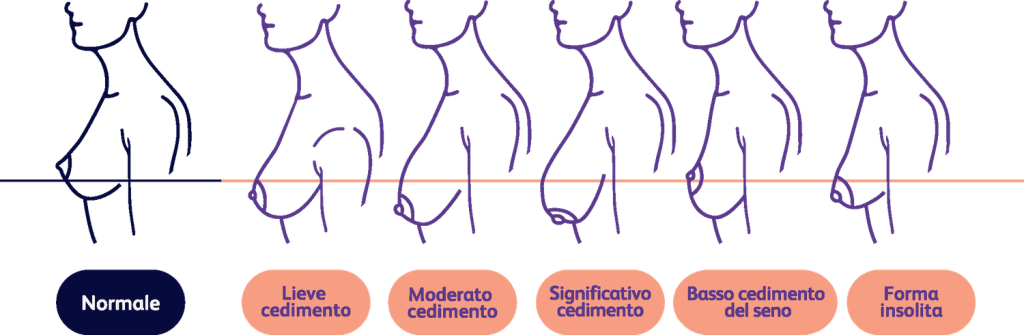
Il cedimento, l’abbassamento o i cambiamenti nella forma del seno si verificano perché la qualità del tessuto cambia nel tempo, compromettendo la forza del tessuto necessaria a mantenere la posizione del seno.1,2,11
Con l’avanzare dell’età, la graduale perdita di collagene causa l’assottigliamento e la riduzione dell’elasticità della pelle, con conseguenti cedimenti e rughe.1,12
Esistono diversi
fattori che
possono
accelerare
tale processo:1,12

Genetica

Gravità

Fumo

Precedenti interventi

Sostituzione o rimozioni
di impianti al seno

Esposizione al sole
e ai raggi UV

Dieta e cambi di peso

Gravidanza e allattamento

Menopausa

Composizione corporea
Questo può portare le donne a sentirsi insoddisfatte dell’aspetto del seno o a desiderare un ulteriore intervento chirurgico.1,2,11
Una seconda operazione è generalmente più complessa e può comportare costi aggiuntivi per il paziente.1,2,11
Circa 1 donna su 3 operata al seno si sottopone a un secondo intervento. Secondo gli studi clinici, entro 10 anni dall’intervento al seno, molte donne si sottopongono a un nuovo intervento per rivedere i risultati chirurgici iniziali.16
Quasi la metà degli interventi di revisione tra le pazienti con protesi mammarie estetiche è dovuta al cedimento del seno.16
Scopri l’Internal Bra
L’Internal Bra consiste in una serie di tecniche di chirurgia mammaria, che hanno lo scopo di aiutare a mantenere la forma e la posizione del seno nel tempo, stabilizzandolo dall’interno.27
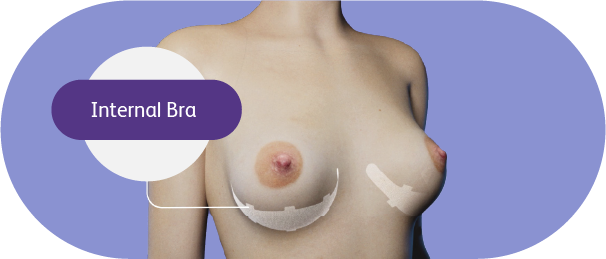


Supporto immediato al momento dell’intervento4,17

Promuove la produzione di nuovo collagene e di nuovo tesutto4,5,7

Rende i tessuti 3-4 volte più forti rispetto a prima dell’intervento 4,5,7

Si riassorbe nel corso di un anno e mezzo 4,3,5
Sulla base dei dati preclinici in archivio.
I risultati potrebbero non essere correlati agli esiti clinici.
Scopri come funziona l’Internal Bra
Cosa piace alle donne
del nostro prodotto30
63%
52%
50%
49%
Su un campione di 2038 donne intervistate, i tre fattori principali per la scelta di un chirurgo sono30
61%
38%
Raccomandazioni di amici, parenti o di un professionista sanitario
32%
Risultati con Internal Bra
Immagini reali di
pazienti prima e dopo l’intervento
Riduzione del seno
Internal Bra
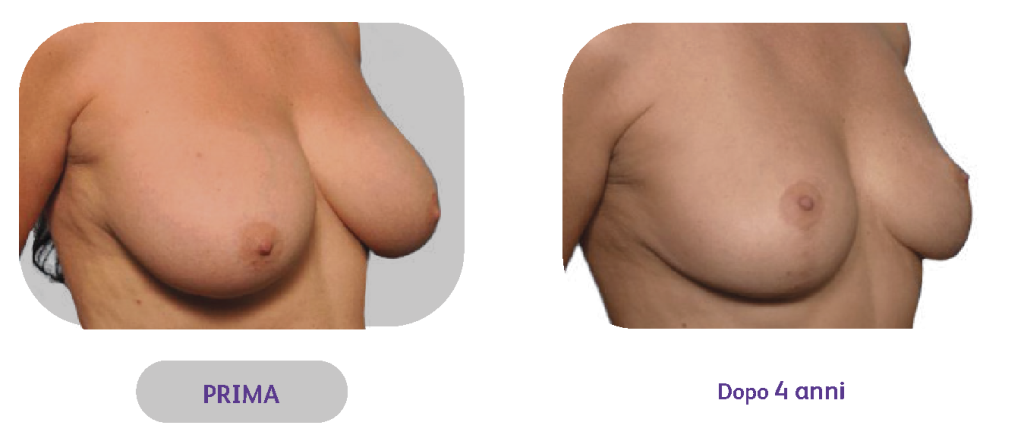
Dr Bruce Van Natta, US
Aumento del seno
Internal Bra
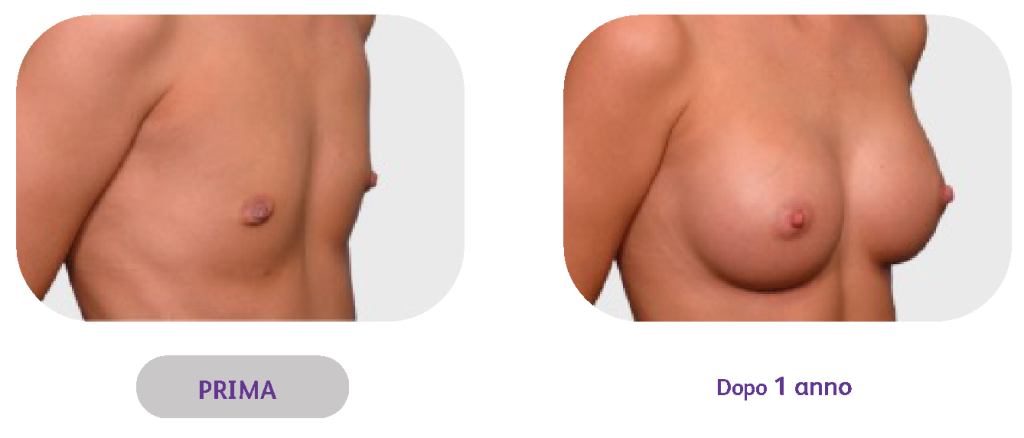
Dr Bruce Van Natta, US
Lifting del seno con impianto
Internal Bra
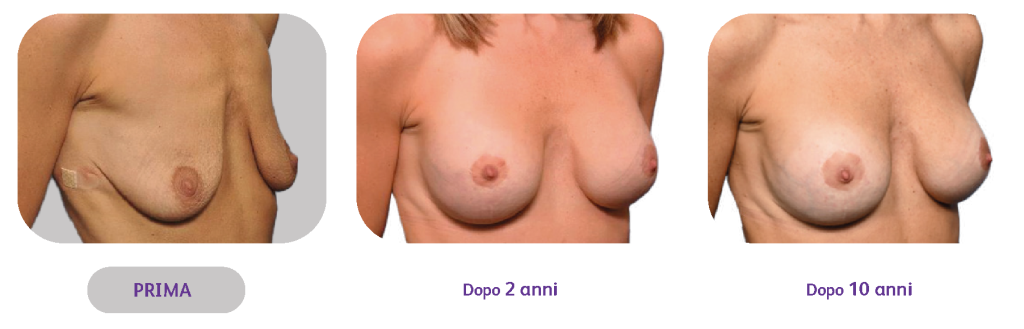
Dr Bruce Van Natta, US
Mastopessi
Internal Bra
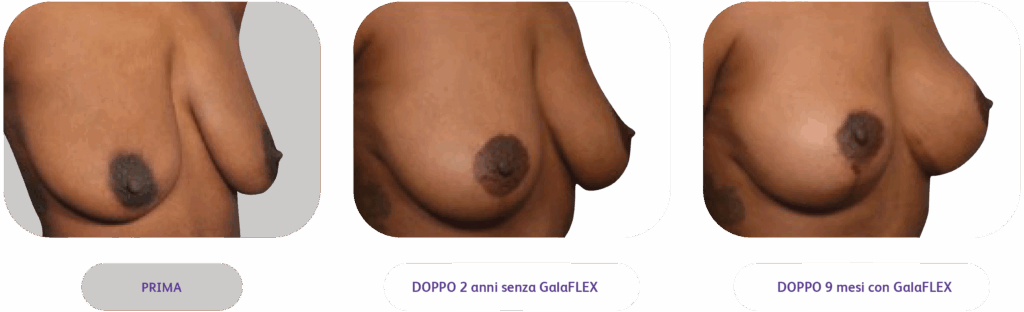
Dr Bruce Van Natta, US
Riduzione del seno
Internal Bra
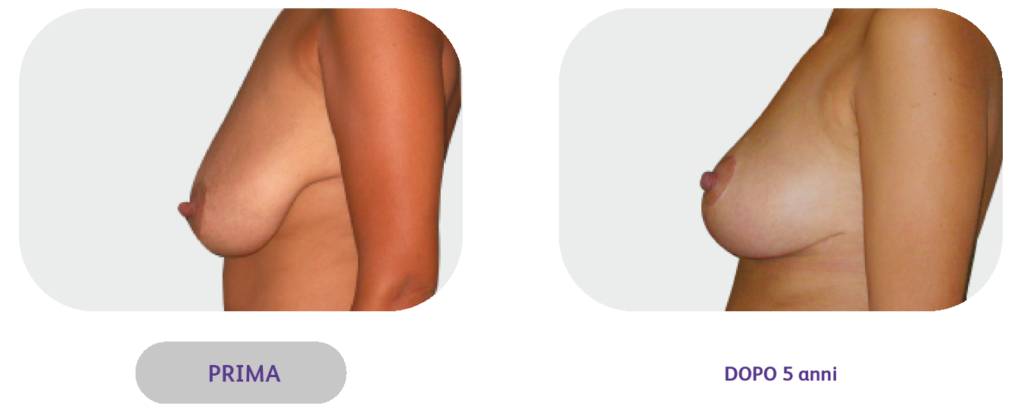
Dr Roy de Vita, Italia
Trova il mio chirurgo
Trova il tuo chirurgo Internal Bra
- Germany
- Greece
- Italy
- Spain
- UK
essenziali da fare al tuo chirurgo
Domande Frequenti sulla tecnica Internal Bra
Cosa è un Internal Bra?
L’Internal Bra consiste in una serie di tecniche di chirurgia mammaria, che hanno lo scopo di aiutare
a mantenere la forma e la posizione del seno nel tempo, stabilizzandolo dall’interno.27
La chirurgia del seno con la tecnica Internal Bra viene talvolta paragonata a un reggiseno interno "push-up" o a un'amaca interna.27
Sentirò la presenza dell’Internal Bra dopo l’intervento?
Per alcuni pazienti, può essere palpabile sulla pelle dove è stato impiantato.
Tuttavia, questo fenomeno diminuisce nel tempo, man mano che si integra completamente nel tessuto nativo.3
L’Internal Bra può essere utilizzato in combinazione con una protesi al seno?
Viene utilizzato negli interventi di chirurgia estetica del seno, in cui può essere utilizzata anche una protesi mammaria. 5,9,17
L’Internal Bra rimarrà per sempre nel mio corpo?
Dipende dal materiale utilizzato. Alcune tecniche di Internal Bra utilizzano materiali che vergono assorbiti dopo un po’ di tempo,3,4,5 mentre altre utilizzano materiali che rimangono per sempre nell’organismo.
References:
1. Choi JW, Kwon SH, Huh CH, Park KC, Youn SW. The influences of skin visco-elasticity, hydration level and aging on the formation of wrinkles: a comprehensive and objective approach. Skin Res Technol. 2013;19(1):e349-e355. 2. Vera, Martin. “Phases of Wound Healing: The Breakdown.” Wound Source. Accessed on Nov 13, 2020. 3. GalaFLEXTM Scaffold Instructions For Use. 4. Preclinical data on file. Results may not correlate to clinical outcomes. 5. Deeken CR, Matthews BD. Characterization of the Mechanical Strength, Resorption Properties, and Histologic Characteristics of a Fully Absorbable Material (Poly-4- hydroxybutyrate-PHASIX Mesh) in a Porcine Model of Hernia Repair. ISRN Surg. 2013;2013:238067. Published 2013 May 28. 6. Williams SF, Martin DP, Moses AC. The History of GalaFLEX P4HB Scaffold. Aesthet Surg J. 2016;36(suppl 2):S33-S42. 7. Scott JR, Deeken CR, Martindale RG, Rosen MJ. Evaluation of a fully absorbable poly-4-hydroxybutyrate/absorbable barrier composite mesh in a porcine model of ventral hernia repair. Surg Endosc. 2016;30(9):3691-3701. 8. Martin, DP, Williams, SF. Medical applications of poly-4-hydroxybutyrate: a strong flexible absorbable biomaterial. Biochemical Engineering Journal. Volume 16, Issue 2, 2003. Pages 97- 105, ISSN 1369-703X, https://doi.org/ 10.1016/S1369-703X(03)00040-8. 9. Mallucci P, Bistoni G. Experience and Indications for the Use of the P4HB Scaffold (GalaFLEX) in Aesthetic Breast Surgery: A 100-Case Experience. Aesthet Surg J. 2022;42(12):1394-1405. 10. Buccheri EM, Villanucci A, Mallucci P, Bistoni G, de Vita R. Synthetic Reabsorbable Mesh (GalaFLEX) as Soft Tissue Adjunct in Breast Augmentation Revision Surgery. Aesthet Surg J. 2023;43(5):559-566. 11. Levenson SM, Geever EF, Crowley LV, Oates JF 3rd, Berard CW, Rosen H. The Healing of Rat Skin Wounds. Ann Surg. 1965;161(2):293–308. 12. Thornton, M. Julie. “Estrogens and Aging Skin.” Dermato-Endocrinology, vol. 5, no. 2, 2013, pp. 264–270., doi:10.4161/derm.23872. 13. G. Patrick Maxwell, MD et al. “Ten-Year Results From the Natrelle 410 Anatomical Form-Stable Silicone Breast Implant Core Study.” Aesthetic Surgery Journal 2015, Vol 35(2) 145–155. 14. W. Grant Stevens, MD, et al. “Ten-year Core Study Data for Sientra’s Food and Drug Administration–Approved Round and Shaped Breast Implants with Cohesive Silicone Gel.” Plastic and Reconstructive Surgery. April Supplement 2018. 15. Hammond DC, Canady JW, Love TR, Wixtrom RN, Caplin DA. Mentor Contour Profile Gel Implants: Clinical Outcomes at 10 Years. Plast Reconstr Surg. 2017;140(6):1142-1150. 16. Grewal NS, Fisher J. Why do patients seek revisionary breast surgery? Aesthet Surg J. 2013 Feb;33(2):237-44. 17. Martin, D. P., Badhwar, A., Shah, D. V., Rizk, S., Eldridge, S. N., Gagne, D. H.,& Scott, J. R. (2013). “Characterization of poly-4-hydroxybutyrate mesh for hernia repair applications.” Journal of Surgical Research, 184(2), 766-773. 18. Adams WP Jr, Baxter R, Glicksman C, Mast BA, Tantillo M, Van Natta BW. The Use of Poly-4-Hydroxybutyrate (P4HB) Scaffold in the Ptotic Breast: A Multicenter Clinical Study. Aesthet Surg J. 2018;38(5):502-518. 19. Pineda Molina C, Hussey GS, Liu A, Eriksson J, D’Angelo WA, Badylak SF. Role of 4-hydroxybutyrate in increased resistance to surgical site infections associated with surgical meshes. Biomaterials. 2021;267:120493. 20. Klinge U, Junge K, Spellerberg B, Piroth C, Klosterhalfen B, Schumpelick V. “Do multifilament alloplastic meshes increase the infection rate? Analysis of the polymeric surface, the bacteria adherence, and the in vivo consequences in a rat model.” J Biomed Mater Res. 2002;63(6):765-71. 21. Halaweish, Ihab, et al. “Novel in vitro model for assessing susceptibility of synthetic hernia repair meshes to Staphylococcus aureus infection using green fluorescent protein-labeled bacteria and modern imaging techniques.” Surgical infections 11.5 (2010): 449-454. 22. Engelsman, A. F., van der Mei, H. C., Ploeg, R. J., & Busscher, H. J. (2007). “The phenomenon of infection with abdominal wall reconstruction.” Biomaterials, 28(14), 2314-2327. 23. Deeken CR, Chen DC, Lopez-Cano M, Martin DP, Badhwar A. Fully resorbable poly-4-hydroxybutyrate (P4HB) mesh for soft tissue repair and reconstruction: A scoping review. Front Surg. 2023;10:1157661. Published 2023 Apr 12. doi:10.3389/fsurg.2023.1157661 24. Nair NM, Mills DC. Poly-4-Hydroxybutyrate (P4HB) Scaffold Internal Support: Preliminary Experience with Direct Implant Opposition During Complex Breast Revisions. Aesthet Surg J. 2019;39(11):1203–1213. 25. Williams, Simon F., David P. Martin, and Arikha C. Moses. “The History of GalaFLEX P4HB Scaffold.” Aesthetic Surgery Journal 36.Suppl 2 (2016): S33–S42. PMC. Web. 1 June 201725. Williams, Simon F., David P. Martin, and Arikha C. Moses. “The History of GalaFLEX P4HB Scaffold.” Aesthetic Surgery Journal 36.Suppl 2 (2016): S33–S42. PMC. Web. 1 June 2017. 26. Cuzalina, A., G. Tolomeo, P., & A. Mañón, V. (2023). Revisions for Complications of Aesthetic Breast Surgery. IntechOpen. 27. Wallace L, Wokes JET. Internal Bra: A literature Review and Sub-Classification of Definitions. Aesthetic Plast Surg. 2024 Sep;48(17):3298-3303. doi: 10.1007/s00266-023-03802-4. Epub 2024 Jan 8. PMID: 38189817. 28. https://www.realself.com/surgical/breast-augmentation/cost; https://www.realself.com/surgical/breast-implant-revision/cost 29. Wallace L, Wokes JET. Internal Bra: A literature Review and Sub-Classification of Definitions. Aesthetic Plast Surg. 2024 Sep;48(17):3298-3303. doi: 10.1007/s00266-023-03802-4. Epub 2024 Jan 8. PMID: 38189817. 30. Data on File. Voice of Patient Blinded Survey conducted by Kantar, March 2024.